ME+Beijing
ME+Beijing is a text-driven audio installation designed as a collective listening experience. Through parallel monologues, the work presents multi-perspective narratives about myth, the city, and power, foregrounding listening as a situated, spatial practice.
INSTALLATION VIEW
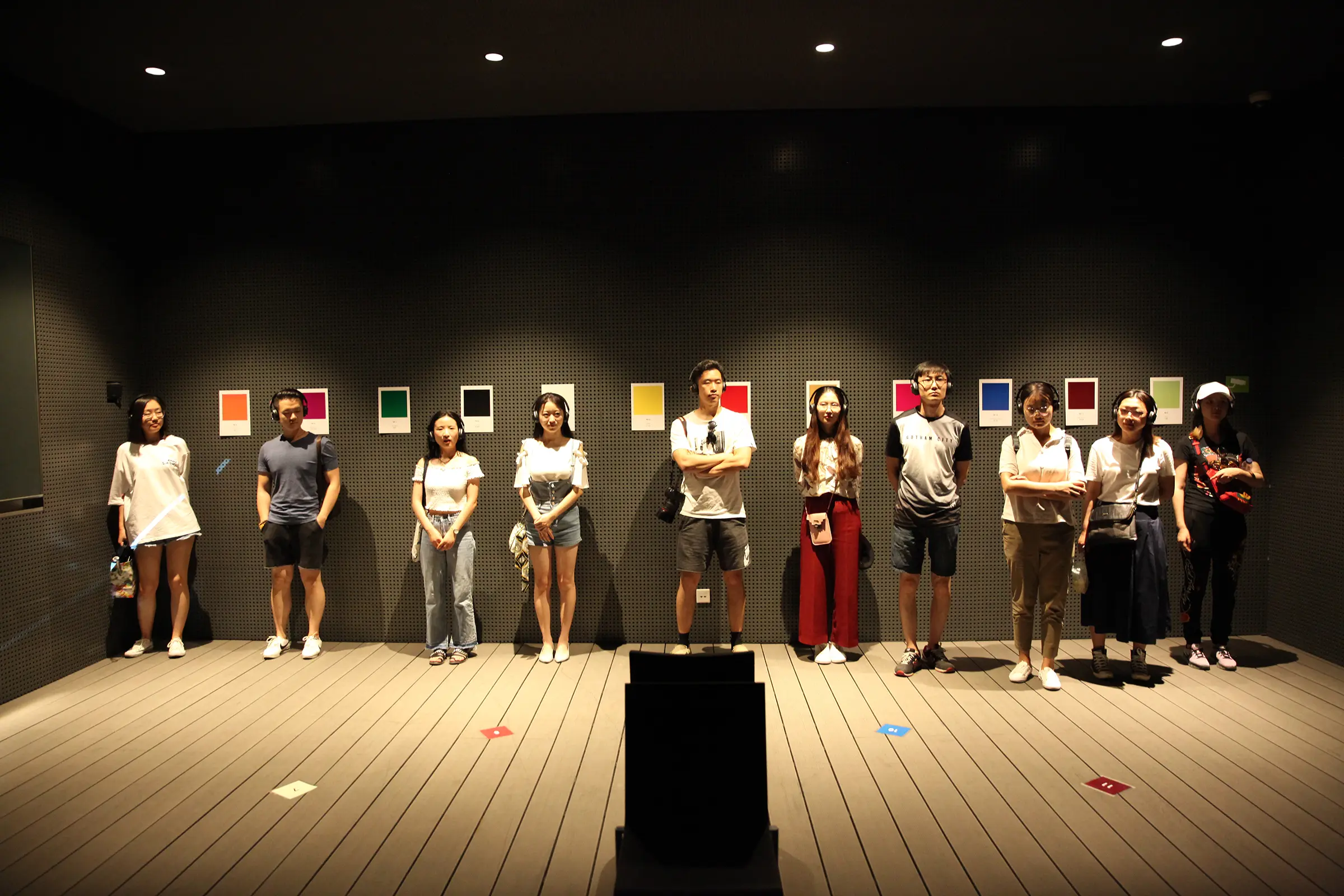
OVERVIEW
The work is based on an alternative founding myth of Beijing: the ‘eight-armed Nezha city’. This centuries-old narrative combines historical and fictional elements, intertwining myth, urban planning, and power. At its centre are the figures Liu Bowen and Yao Guangxiao, who were commissioned by the third Ming emperor Yongle to devise a plan for the new capital — under constant threat from dragons and under the protection of the deity Nezha.
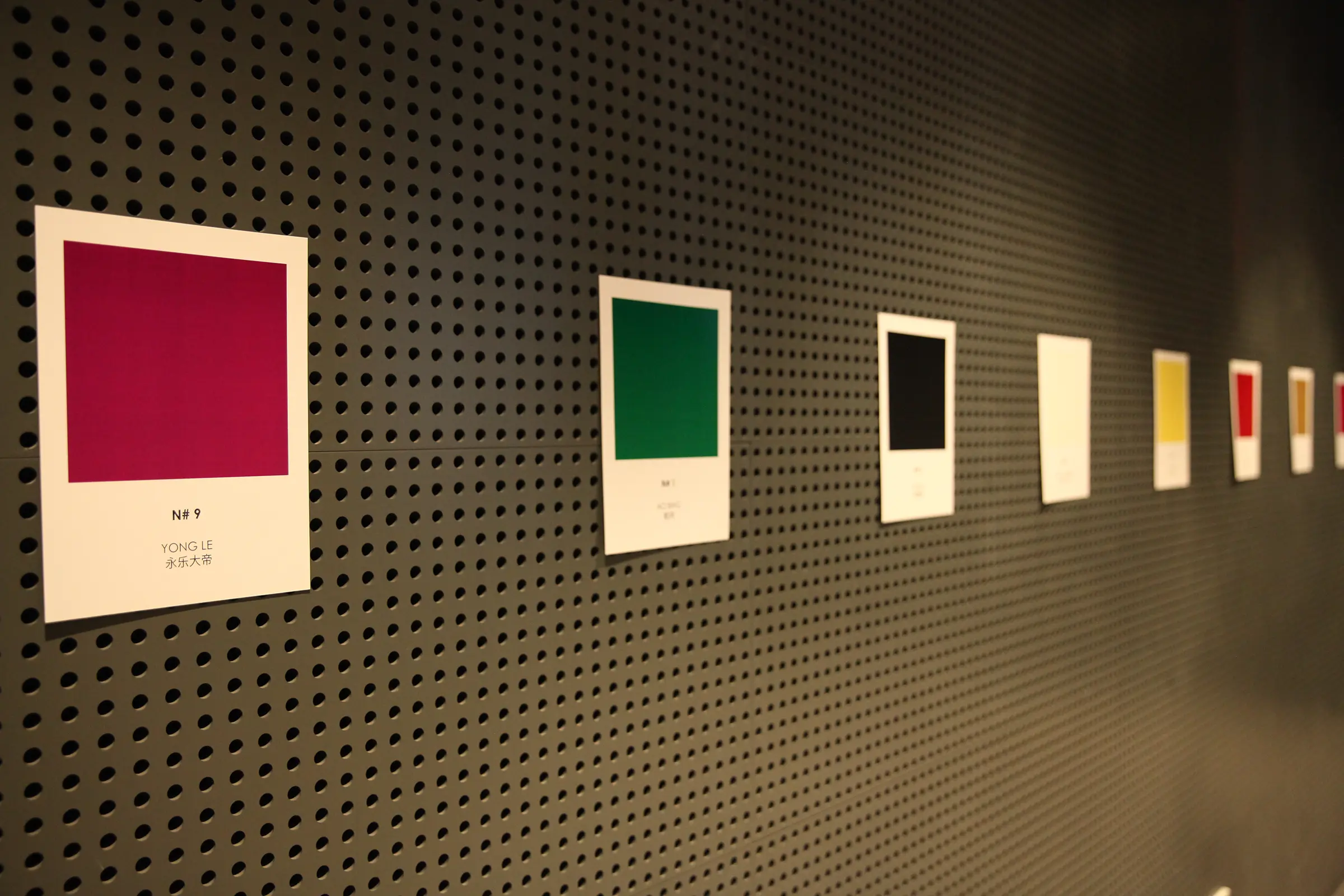
Participants begin by choosing one of ten figures, thereby selecting one of two language tracks (German or Chinese). Within the shared space, these tracks interweave into a collective perception resembling a montage.
AUDIO (TEASER)
Teaser (41 s): excerpt from the monologue of the figure Liu Bowen (Chinese) with German voice-over translation.
AUDIO AND PARTICIPANT SETUP
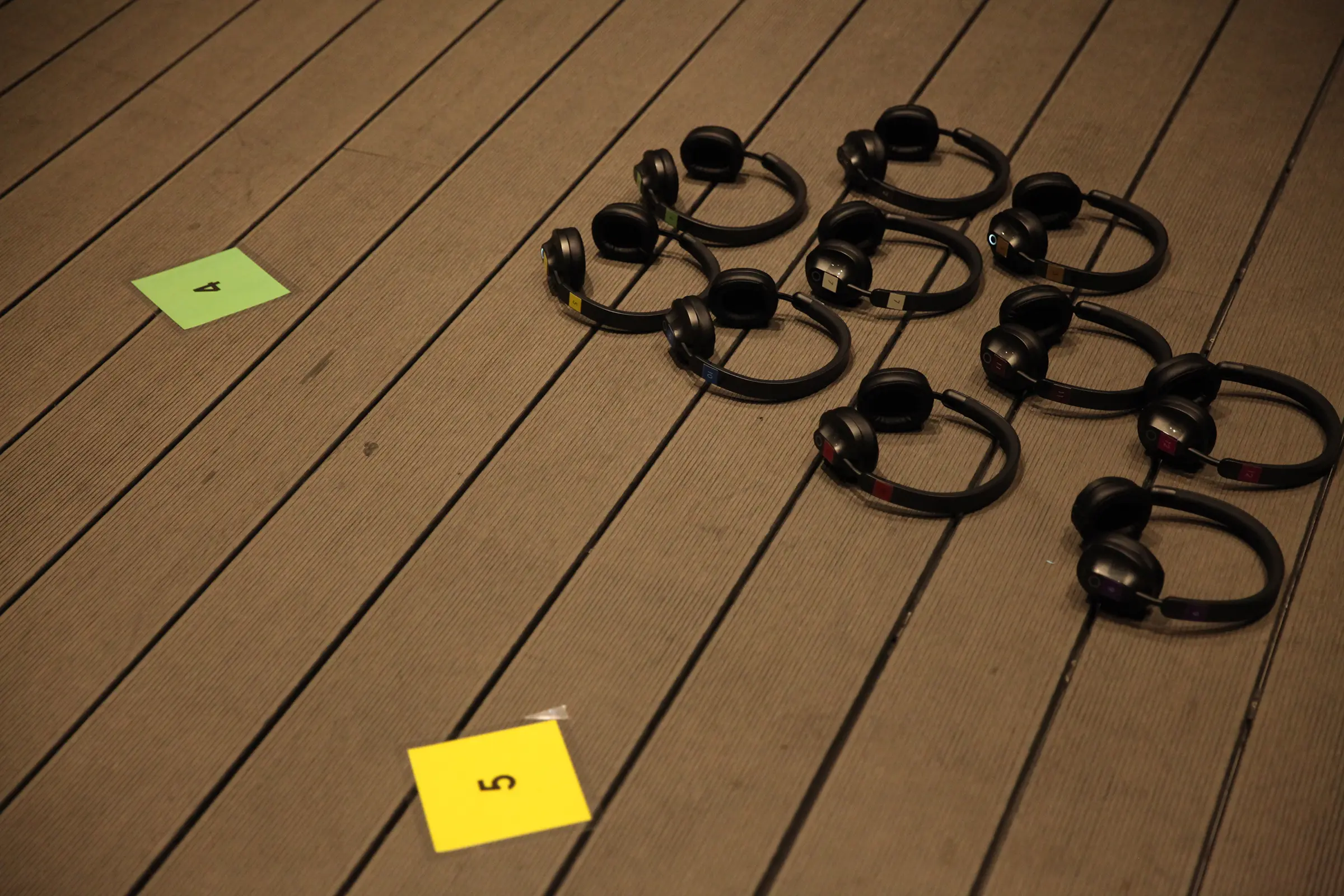
The installation runs in timed sessions. At the beginning, ten participants are given numbered wireless headphones, each linked to a specific narrative perspective. The audio tracks are available in German or Chinese.
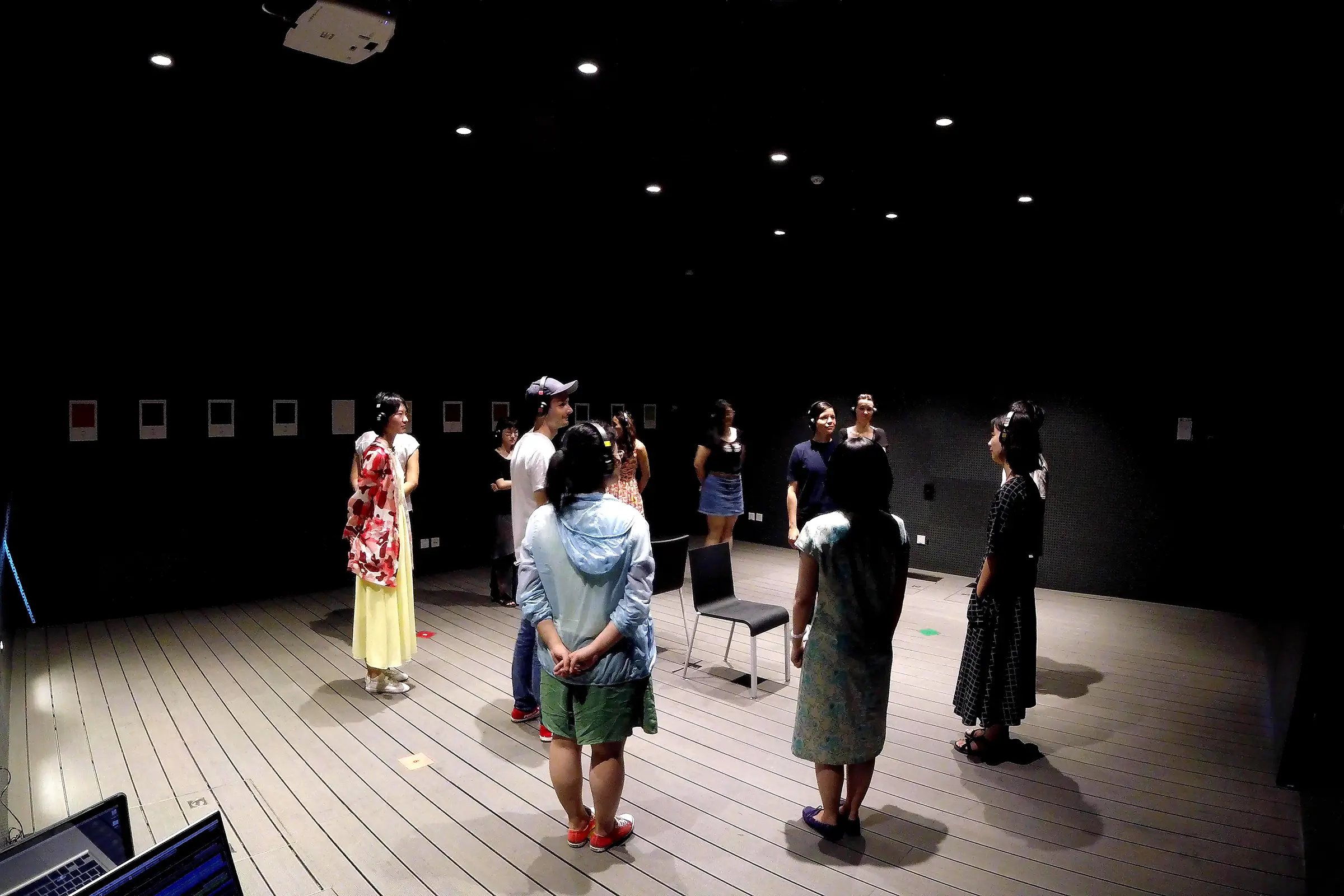
During each approximately twelve-minute run, participants listen simultaneously in the same room. Through spatial proximity, overlaps and resonances emerge — a deliberate co-listening of other voices without dissolving individual perspectives.
After the sequence ends, the space is reset for a new group.
SPACE & ACTIVATION
The audio installation is activated through minimal performative interventions. These interventions are not representational; rather, they structure the listening situation by facilitating entry into the space, arranging participants, and shifting between individual and collective perception.
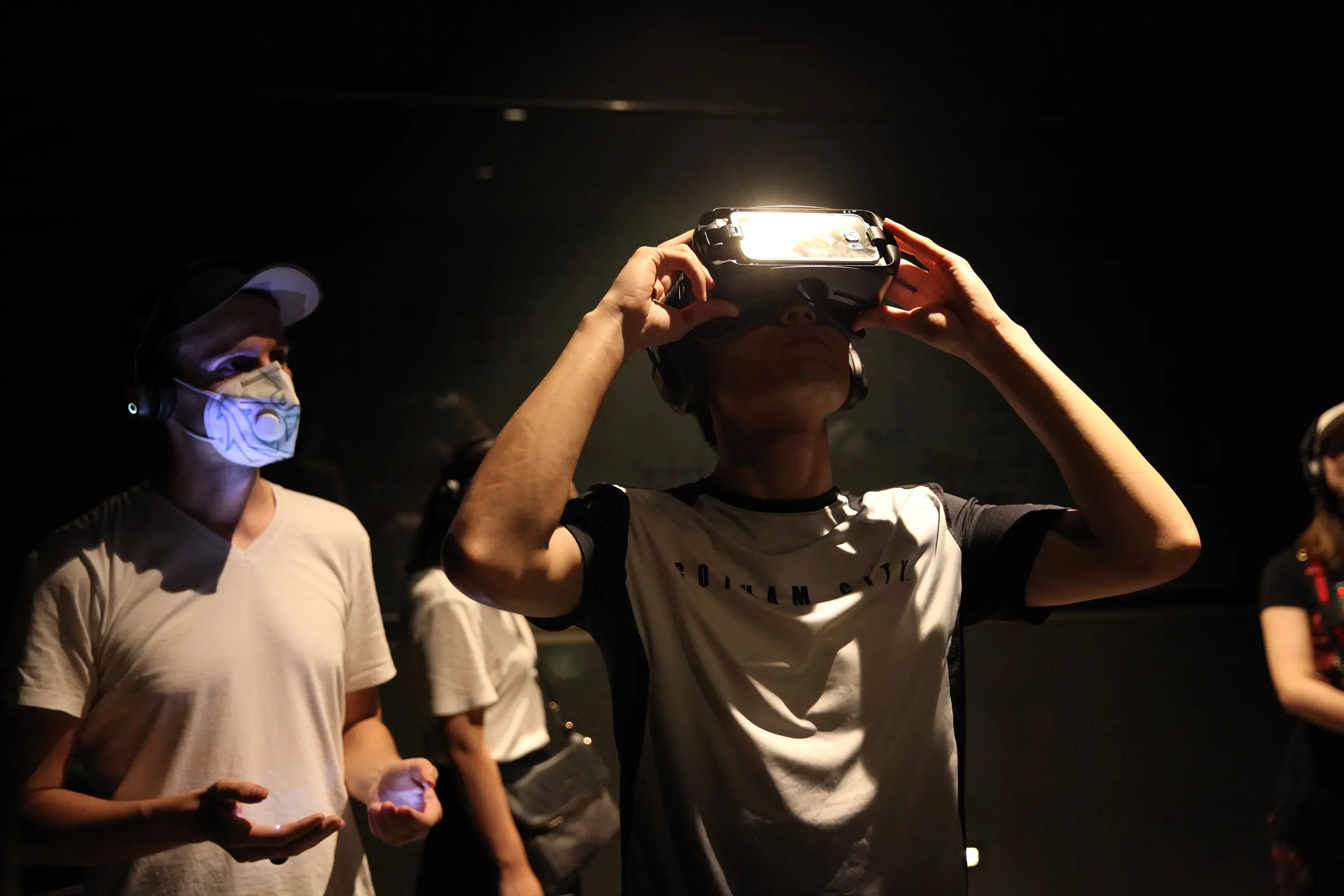
Reduced visual elements are used, including simple props, subtle video projections, and a mobile VR headset. The visual layer remains deliberately fragmentary and subordinate to the audio work. The VR headset provides a brief immersive glimpse of a central location within the narrated stories, extending the listening experience with a spatial reference.
CONTEXT
ME+Beijing was developed following the collaborative project ME+Rome (Villa Massimo, 2017), which explored the founding myth of Rome. During a three-month residency with the Goethe-Institut China, KubelíkGoetzke researched historical myths, architectural structures, and contemporary representations of Beijing.
The work is part of the ongoing ME+ series, which develops text-driven audio installations as multi-perspective listening experiences. At its core is the idea of listening as a spatial, social, and situated practice.
FACTS
- Year: 2018
- Format: Text-driven audio installation with performative activation
- Venue: Goethe-Institut China, Beijing
- Presentation: repeated runs over three days
- Text: 10 figures / 10 monologues
- Languages: German or Chinese (participants choose)
360° VIEW
The 360° view shows a central location within the narrative world: a golden plate embedded in the ground bearing the inscription ‘The Central Point of Beijing City’. Opposite lies the Forbidden City.
Within the narrative of ME+Beijing, all figures converge at this point and experience the unfolding events from their respective perspectives. The view functions as a visual reference that complements the audio-based listening situation.
DOCUMENTATION
CREDITS
- Concept & idea: KubelíkGoetzke
- Text & sound design: Tarik Goetzke
- Set design & video: Anna Kubelík
- Voices: Alice Zhang, Zhang Jiahuai, Anna Kubelík, Tarik Goetzke
- Translation (Chinese): Xu Yin
- Production assistance: Dakota Guo (Institute for Provocation, Beijing)
- Artist liaison / organisation: Silva Jährling, Yu Xiao (Goethe-Institut China)
- Production: Goethe-Institut China
- Partner: Institute for Provocation (IFP)
- Photos: Lu Shan (documentation), Tarik Goetzke (GoPro)